Elegant bridal style begins with proportion, comfort and a clear sense of what feels like you. Choose the clothing first, then add accessories that support its shape and texture. A timeless look does not have to be traditional, expensive or white; it simply needs to feel coherent enough that you can stop thinking about it and enjoy the day.
Before appointments, collect a small set of references and identify what you like in each. It might be an open neckline, a fluid fabric or a clean shoulder line rather than the entire dress. This makes a conversation with a stylist more useful than arriving with dozens of unrelated photographs.
Choose a silhouette through movement
An A-line skirt can create room to walk and sit while giving a defined waist. A column or slip silhouette often feels pared back, but fabric weight and lining influence how it drapes. A fuller skirt creates volume and ceremony, although you should try it in a chair and through a doorway before deciding.
These are descriptions, not body rules. You do not need to “correct” your shape to wear a particular silhouette. Ask how the garment can be fitted to your preferences and which structural changes are realistic. A sample dress clipped in place cannot show every detail of a finished fit.
Try walking, raising your arms and sitting for several minutes. If you will dance, test a few ordinary movements. Notice pressure from straps, seams or boning. A garment that looks beautiful in a still photograph should also support the way you intend to spend the celebration.
Understand fabric before choosing embellishment
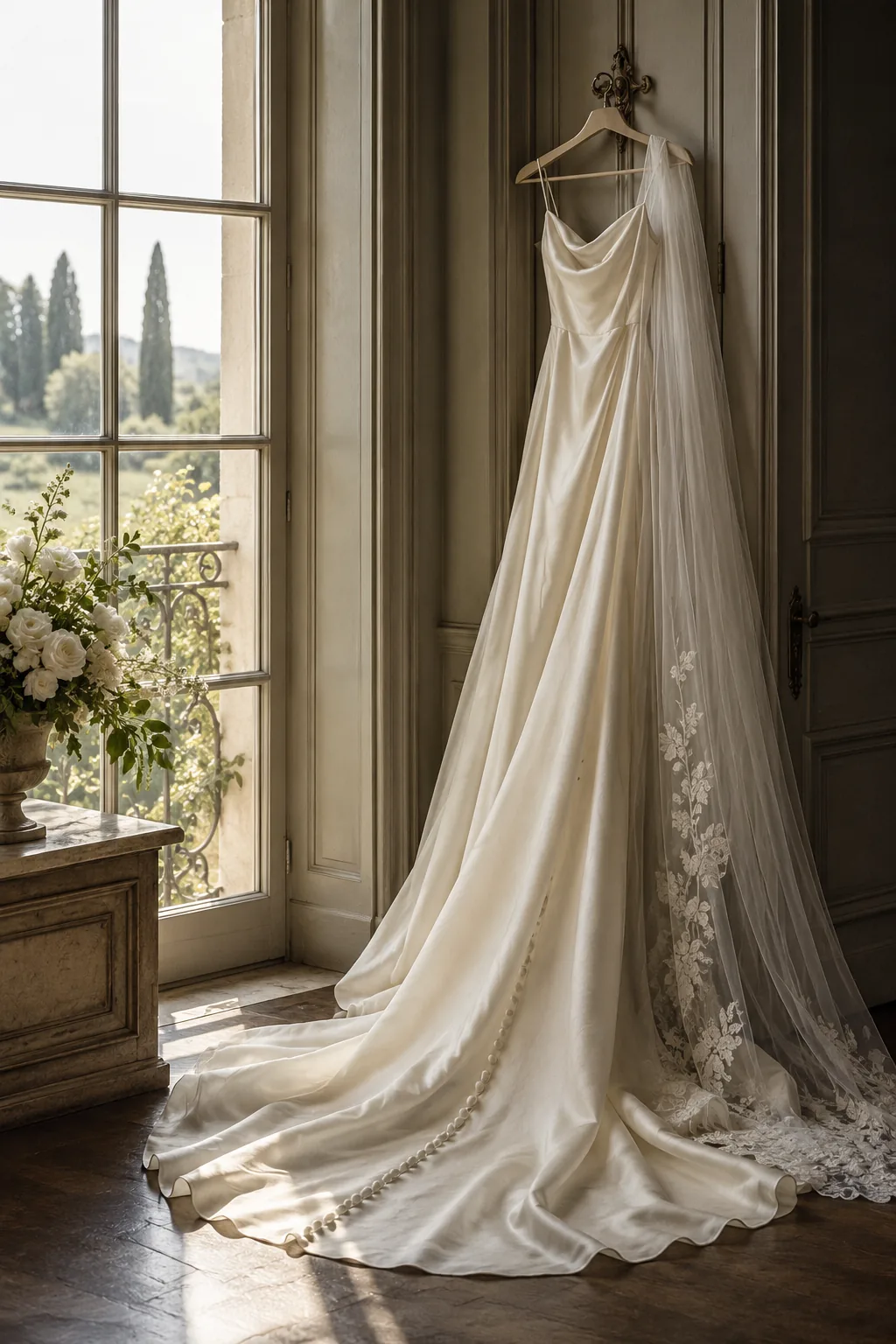
Crepe can offer a clean surface; satin emphasizes light and folds; lace introduces pattern; tulle creates softness and volume. Each fabric behaves differently in motion and under lighting. Look at samples near a window and, when possible, in the kind of light your venue uses.
Ask about lining, transparency and the undergarments required. Bring those items to fittings once they are chosen. An elaborate beaded fabric may need different alteration techniques from a plain skirt, so request a realistic estimate before committing to major changes.
Think about the environment. A delicate train may collect leaves in a garden, while a heavy skirt may feel less comfortable during a warm outdoor ceremony. You can still choose either, but make the decision with a practical plan for movement, photographs and changing temperatures.
Let the neckline guide accessories
With an intricate neckline, earrings may provide enough interest on their own. A simple neckline can support a necklace, but it does not require one. Try accessories with the actual garment or a clear photograph rather than relying on memory of its proportions.
Repeat one feature instead of matching every item exactly. A soft pearl sheen might connect earrings and a hairpin, while a similar metal tone can unite a bracelet and a borrowed ring. Mixing old and new pieces often feels more personal than purchasing a complete coordinated set.
If you are wearing a meaningful family piece, give it space. You can let a brooch, pendant or pair of earrings become the focal point and simplify the rest. Check clasps and fastenings beforehand so a fragile heirloom does not become a worry during the ceremony.
Choose a veil for the setting
A short veil can feel light and easy to manage; a longer one adds movement and a strong ceremony silhouette. Try the veil with your planned hairstyle, including the exact position of the comb. The attachment should feel secure without pulling uncomfortably.
Consider wind, steps and the aisle surface. Ask someone to practice arranging the veil and removing it without disturbing your hair. If you prefer no veil, a ribbon, simple hairpiece or nothing at all can be equally complete. Avoid choosing an accessory only because it appears in most inspiration pictures.
Plan hair and makeup around your habits
Bring references that show the finish you like, such as softly defined eyes or a polished low bun, rather than asking to look like another person's face. Explain your usual routine, sensitivities and how much maintenance you want during the day.
If you arrange a trial, photograph the result in natural light and ordinary indoor light. Wear it long enough to notice comfort and movement. Discuss what touch-up items are useful and who will carry them. A style should still feel like you when you look in a mirror without a camera present.
For skin or allergy concerns, seek appropriate professional advice rather than experimenting close to the event. Allow time to return to familiar products if something does not suit you. The wedding week is a poor moment to discover that an entirely new routine feels uncomfortable.
Dress for the season without chasing trends
For a cool-weather wedding, consider a layer that works with your sleeves and neckline. Test how it looks closed as well as open. A beautiful wrap that slides constantly may be less useful than a well-fitted jacket.
For warmer conditions, consider breathable layers, shade during photographs and shoes you can wear for the actual surfaces involved. Seasonal styling is about comfort and context, not an obligation to use a fashionable color or fabric. Our wedding planning checklist helps you coordinate fittings with other final preparations.
A cohesive-look checklist
- Bring shoes and intended undergarments to fittings.
- Test sitting, walking, stairs and arm movement.
- Try jewelry beside the garment's neckline and fabric.
- Practice veil removal, closures and any bustle.
- Choose a useful layer and an unobtrusive repair kit.
- Assign one person to help with clothing on the day.
Let the wedding inform the look gently
A garden ceremony might echo in a botanical hairpin; an evening dinner might suit a sharper silhouette. The connection can be subtle. You do not have to dress as a literal extension of the table flowers.
Our ceremony inspiration and personal keepsake ideas offer ways to repeat materials thoughtfully. A consistent mood often comes from restraint: one meaningful detail carried through a few places, with enough variation that the celebration still feels alive.
Frequently asked questions
Does timeless bridal style mean a plain dress?
No. Lace, volume, color and embellishment can all feel enduring when they reflect your taste and work together. Simplicity is one option rather than a rule.
Must my jewelry match my ring?
No. Consider balance and comfort instead of insisting on identical metals. Try the complete combination and keep what feels intentional to you.
Should I buy a second outfit?
Only if it serves a practical or personal purpose. A change may help dancing or temperature comfort, but it also adds cost, alterations and time away from guests.
When should I choose shoes?
Choose them early enough for hem fittings. Bring a backup only after checking whether its height changes how safely you can walk in the outfit.
Back to top ↑